

Projects
Her Story is so proud and grateful to work on a range of projects dedicated to building the evidence-base and supporting initiatives to end domestic, family, and sexual violence.
Here are some recent projects we've worked on with our amazing partners
•
Here are some recent projects we've worked on with our amazing partners •
De Gruyter Handbook of Structural Violence
Authored by Dr Chay Brown (Her Story), Hannah Taylor-Civitarese, Kayla Glynn-Braun (Her Story), Shirleen Campbell and Connie Shaw
About the project
This chapter examines the structural violence embedded in state systems that perpetuate harm against Aboriginal women experiencing domestic, family, and sexual violence. It analyses the impacts of both colonisation and the under-policing of violence against Aboriginal women, where systemic neglect and institutional apathy contribute to impunity for perpetrators while further marginalising survivors.
RISE
Partnered with Gender and Disaster Australia and Top End Two Ways
About the project
RISE is a First Nations-led initiative working alongside Aboriginal communities across the Northern Territory to strengthen disaster preparedness, community resilience, cultural safety and the prevention of gender-based harm. RISE is grounded in local leadership, cultural knowledge, lived experience and self-determination.
RISE (Respect, Inclusion, Safety in Emergencies) is guided by a vision of strong, safe and self-determined communities leading their own disaster preparedness, response and recovery through culture, knowledge, partnership and resilience. RISE is not simply about responding to emergencies. It is about building respect, inclusion, safety and community resilience before disasters occur.
Mapping Women and Children’s Safety in Wadeye and Peppimenarti
About the project
Women and children in Wadeye and Peppimenarti continue to experience significant and interconnected safety challenges. While both communities demonstrate remarkable resilience, strong leadership, and committed local service providers, this assessment, presenting the findings of the Women and Children’s Safety Assessment, commissioned by the TDC, found that the current service system is not adequately resourced to respond to the scale and complexity of need. The findings highlight an urgent need for sustained investment that moves beyond crisis response towards prevention, early intervention, healing, and long-term community safety.
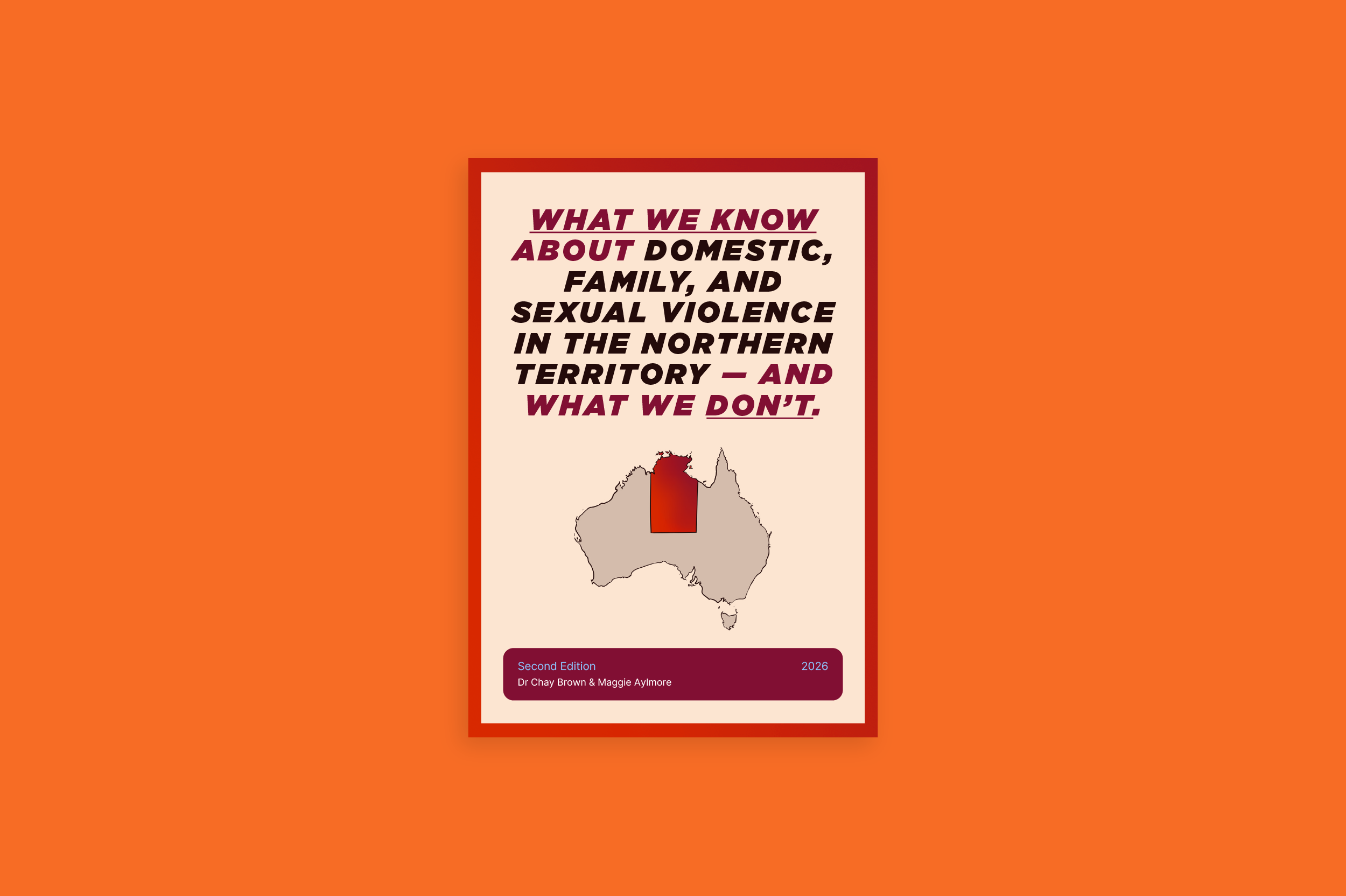
What we know about DFSV in the NT: Evidence Snapshot
Partnered with PARt and Tangentyere Council
About the project
This updated Evidence Snapshot presents the second edition of our data profile on Domestic, Family and Sexual Violence (DFSV) in the Northern Territory (NT). Building on the first edition, this second edition provides the latest available data on DFSV in the NT. Its purpose is two-fold: first, to supply policymakers, community organisations, service providers and researchers with a clear, evidence-informed overview of the scale, patterns and trends of DFSV in the NT; and second, to identify critical gaps in the data and invite stronger inquiry, transparency and ultimately, greater action to be taken to address DFSV in the Territory.
WEAVE Forum 2026
About the project
Her Story Mparntwe, with our partners Tangentyere Women’s Family Safety Group, convened a WEAVE Forum in Mparntwe Alice Springs in May 2026. The forum was designed as a purposeful gathering that brings together First Nations women’s organisations from across Australia with international feminist allies from the WEAVE Collective. The forum focused on sharing knowledge, building solidarity, and supporting collective action to prevent violence against women and children. The forum created a space for sharing stories, strengthening networks, connecting through Culture and collectively caring for movement builders, leaders, and sustainers. Central to the forum is recognition of the leadership, expertise, and lived experience of First Nations women, and the need for sustained structural investment in feminist movements, women’s leadership and collective care.
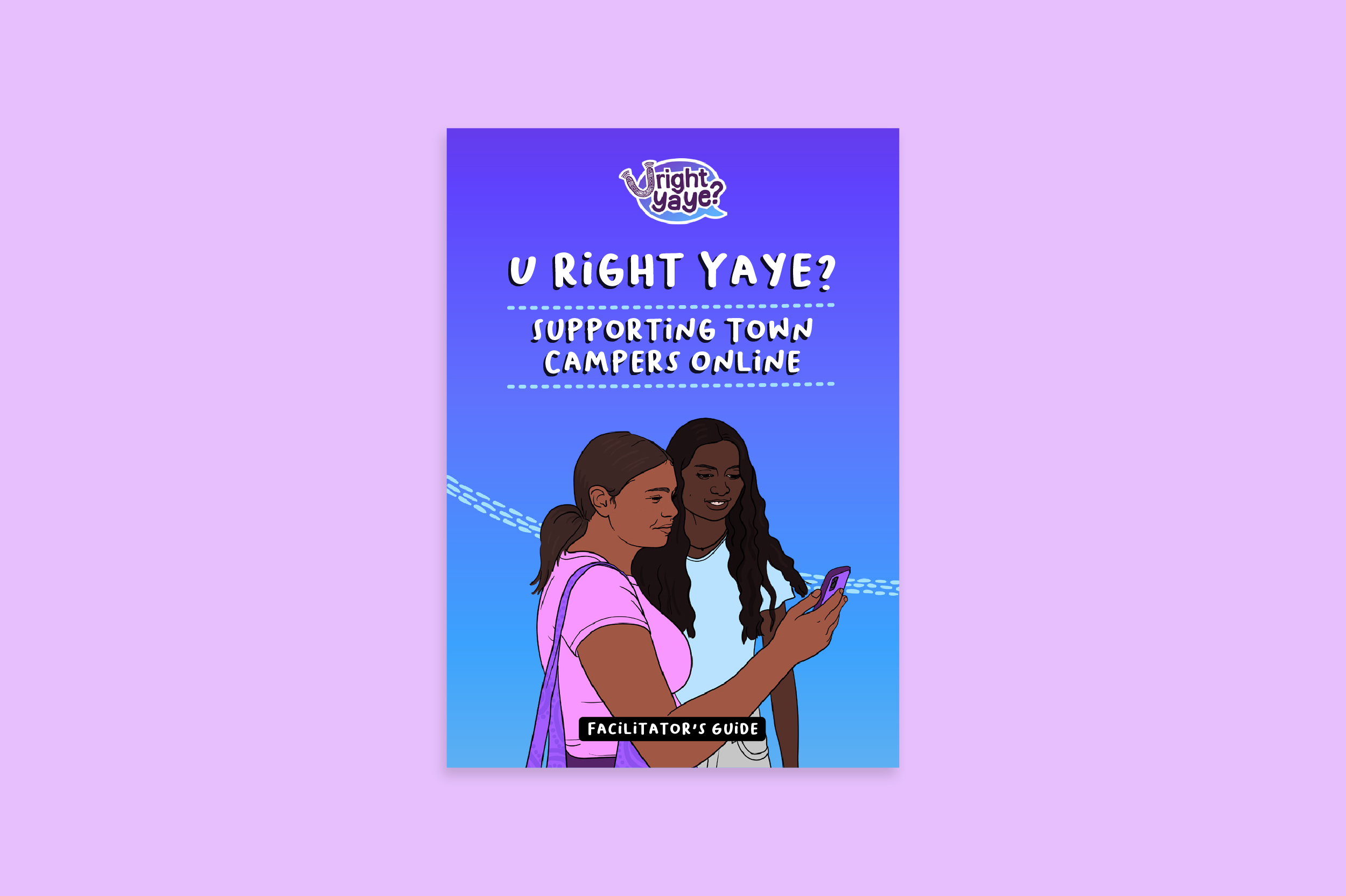
U Right Yaye? Facilitator’s Guide
Funded by NIAA
About the project
U Right Yaye?: Supporting Town Campers to Stay Safe Online is a community-driven program designed to help young people in Alice Springs Town Camps navigate technology safely and confidently. Modelled on the U Right Sis? program, U Right Yaye? uses proven primary prevention approaches adapted to the unique context of Town Camps and aimed at young people aged 10–17. The Facilitator’s Guide was developed to provide all the information and session plans needed for facilitators to deliver U Right Yaye? workshops in a trauma-informed, culturally safe, and engaging way.
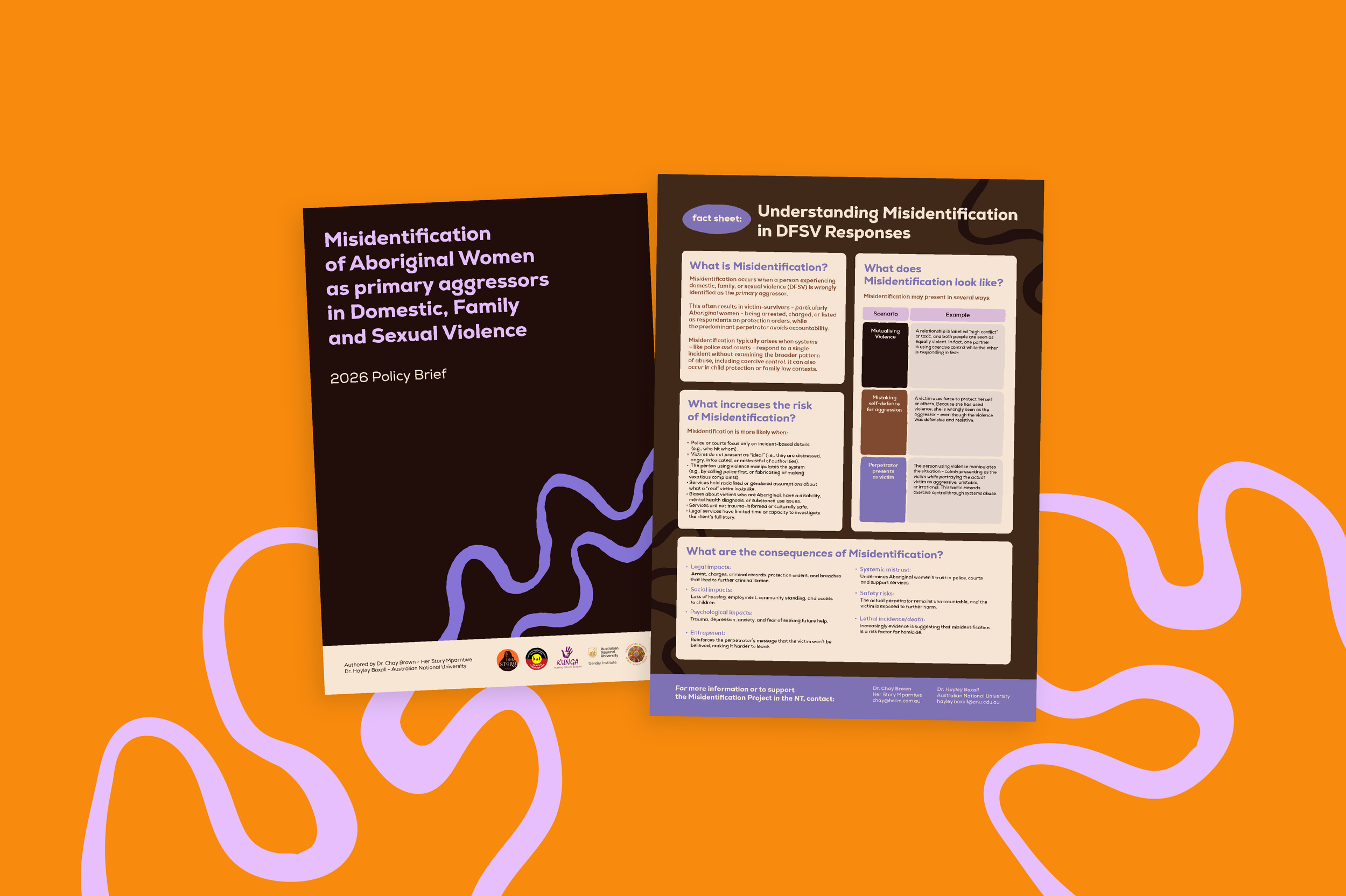
The Misidentification Project
About the project
The Australian National University (ANU) Gender Institute has awarded funding to a groundbreaking new research project that will investigate the extent of Aboriginal women in the Northern Territory being mistakenly identified as perpetrators of domestic, family and sexual violence (DFSV).
The project involves collaboration between leading DFSV academics Drs Hayley Boxall (ANU) and Chay Brown (Her Story Mparntwe) and key Aboriginal organisations and specialist DFSV services including the Kunga Stopping Violence Program (North Australian Aboriginal Justice Agency), Central Australian Aboriginal Family Legal Unit (CAAFLU), and the Tangentyere Women’s Family Safety Group. Northern Territory Police have also lent their support to the project. You can access the Policy Brief here and the Fact Sheet here.

Designing a First Nations Framework to Reduce Gender-Based Harm in Disasters in the Central Desert Countries of Australia
About the project
This initiative responds to evidence that gender-based violence and related harms tend to increase during and after disasters. In recognition of this, the project centres First Nations women’s knowledge and leadership in disaster planning, acknowledging that Indigenous communities hold vital strengths, cultural knowledge, and responsibilities that are essential to effective and sustainable disaster responses. Her Story developed a report which details how the Framework will be implemented, shares recommended next steps, and presents findings from initial research and engagement activities that informed the Framework.
What works to prevent violence against women? Animation
Tangentyere Council and WoSSCA
About the project
Her Story collaborated with Tangentyere Council and Women’s Safety Services of Central Australia (WoSSCA) to produce a series of animations which communicate key concepts in domestic, family, and sexual violence contextualised to the Northern Territory.
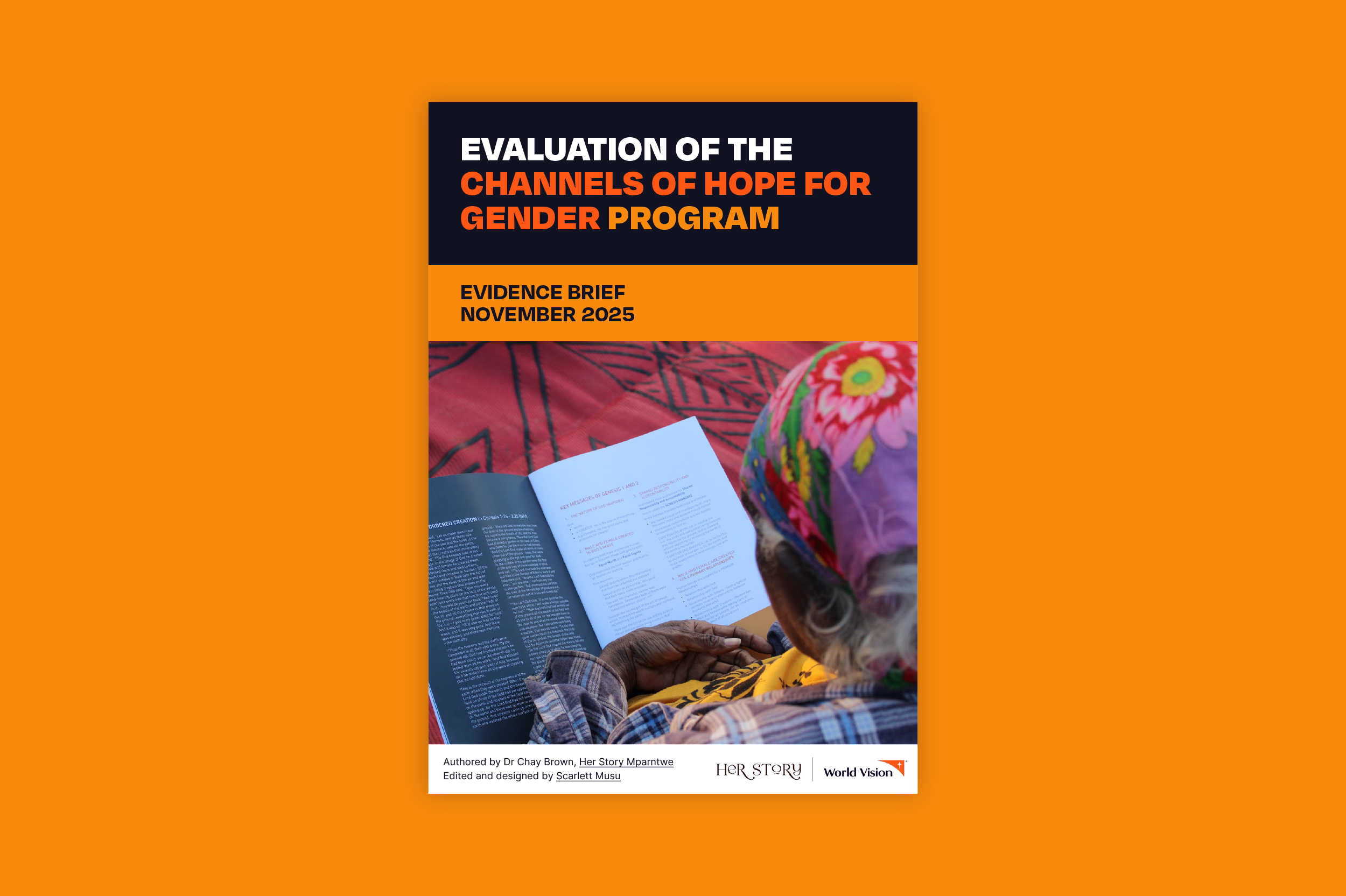
Channels of Hope for Gender Lajamanu Evaluation
World Vision Australia + Lajamanu community
About the project
Her Story, in collaboration with World Vision Australia's Australia First Nations Program (AFNP), conducted an evaluation of the Channels of Hope for Gender (CoHG) Program in Lajamanu (Northern Territory). The program works to strengthen the capacity of local faith leaders and services to prevent domestic violence through a strengths-based approach, rooted in Christian faith and traditional culture. The evaluation aimed to assess community attitudes towards gender, faith, and violence, as well as levels of knowledge about the program. A mixed-methods approach was taken to evaluate the program’s impact, changes in community attitudes, as well as inform future programming. This project builds upon Dr Chay Brown’s previous work with the Lajamanu community which adapted and translated the Together Hopeful Strong framework into Warlpiri (local language).
The Jealousing Project
World Vision Australia + Lajamanu community
About the project
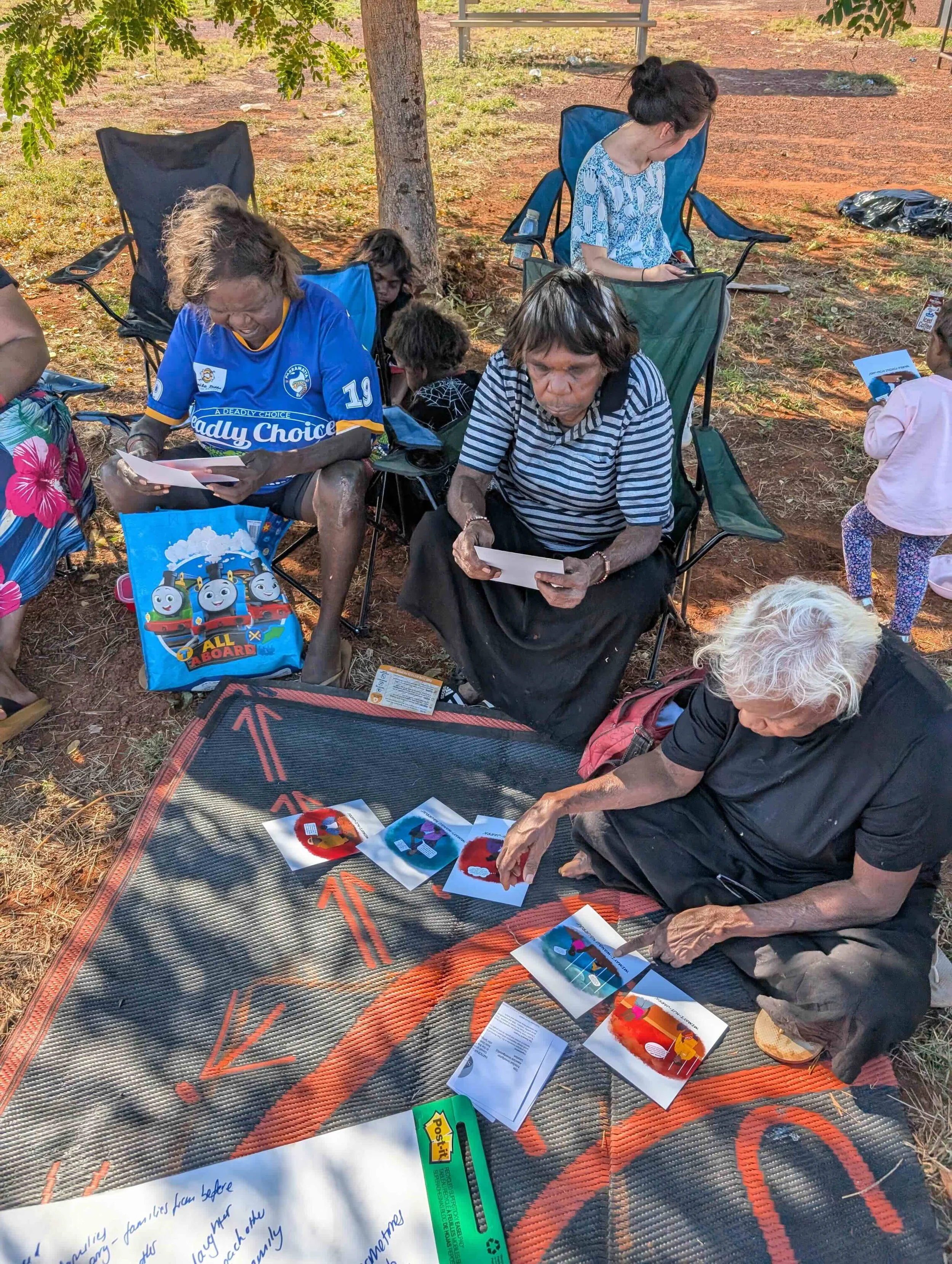
The Jealousing Project aims to address the issue of jealousy and its impact on relationships and community well-being in remote Aboriginal communities, with a focus on Lajamanu. The project developed a locally relevant understanding of ‘jealousing’ and coercive control, through community workshops and guided discussions which explore the cultural, emotional, and social dimensions of jealousy. The project aimed to empower community members to define jealousing in their own terms, identify its harmful effects, develop culturally and contextually relevant resources, and foster healthier relationship dynamics within the community. The illustrated ‘Jealousing Cards’ resource was co-developed through this project, designed to support conversations about jealousy, control, and trust in relationships (seen in photo).
Girls Can Boys Can and Future Yayes Evaluation
About the project
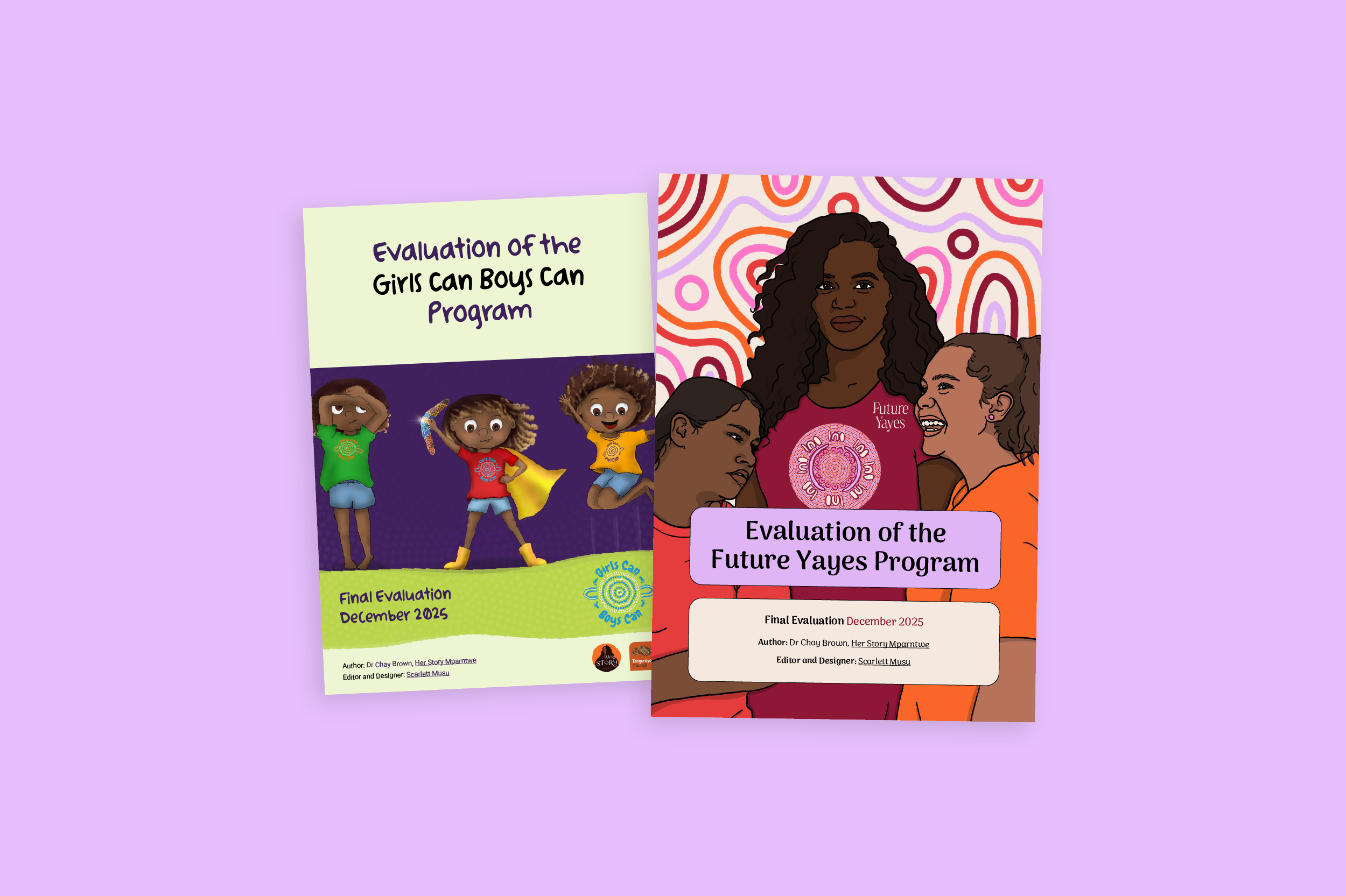
Girls Can Boys Can (GCBC) and Together We Can (Future Yayes) are both primary prevention initiatives that centre on promoting gender equality, the positive representation of Aboriginal children and youth, and fostering respectful relationships. Her Story led the mixed-method evaluation of these projects, combining quantitative tools with qualitative approaches to capture a holistic understanding of shifting attitudes toward gender, violence, and youth leadership. The evaluations measure each programs’ effectiveness in challenging rigid gender stereotypes, empowering Aboriginal young people, and promoting non-violent relationships across communities in Central Australia. Objectives included developing culturally responsive instruments, analysing community-level trends and stakeholder feedback, and providing evidence-based recommendations to strengthen both programs moving forward. Read the GCBC evaluation here; and the Future Yayes evaluation here.

Evaluation of the U Right Sis? Staying Safe Online Project
WoSSCA and Kungas
About the project
U Right Sis? Staying Safe Online is a primary prevention program designed to fill a gap in research and practice by delivering a community-driven, culturally tailored intervention against technology-facilitated abuse (TFA) in remote Central Australian communities. The program evaluation looked at quantitative and qualitative data gathered from the program’s first three years, determining whether U Right Sis? met its core aims and objectives, whilst building the evidence base about “what works” in contextually addressing TFA in remote communities. The program is a partnership between Her Story, Women’s Safety Services of Central Australia (WoSSCA) and Kunga Stopping Violence Program (Kungas).
Key Achievements
About the project
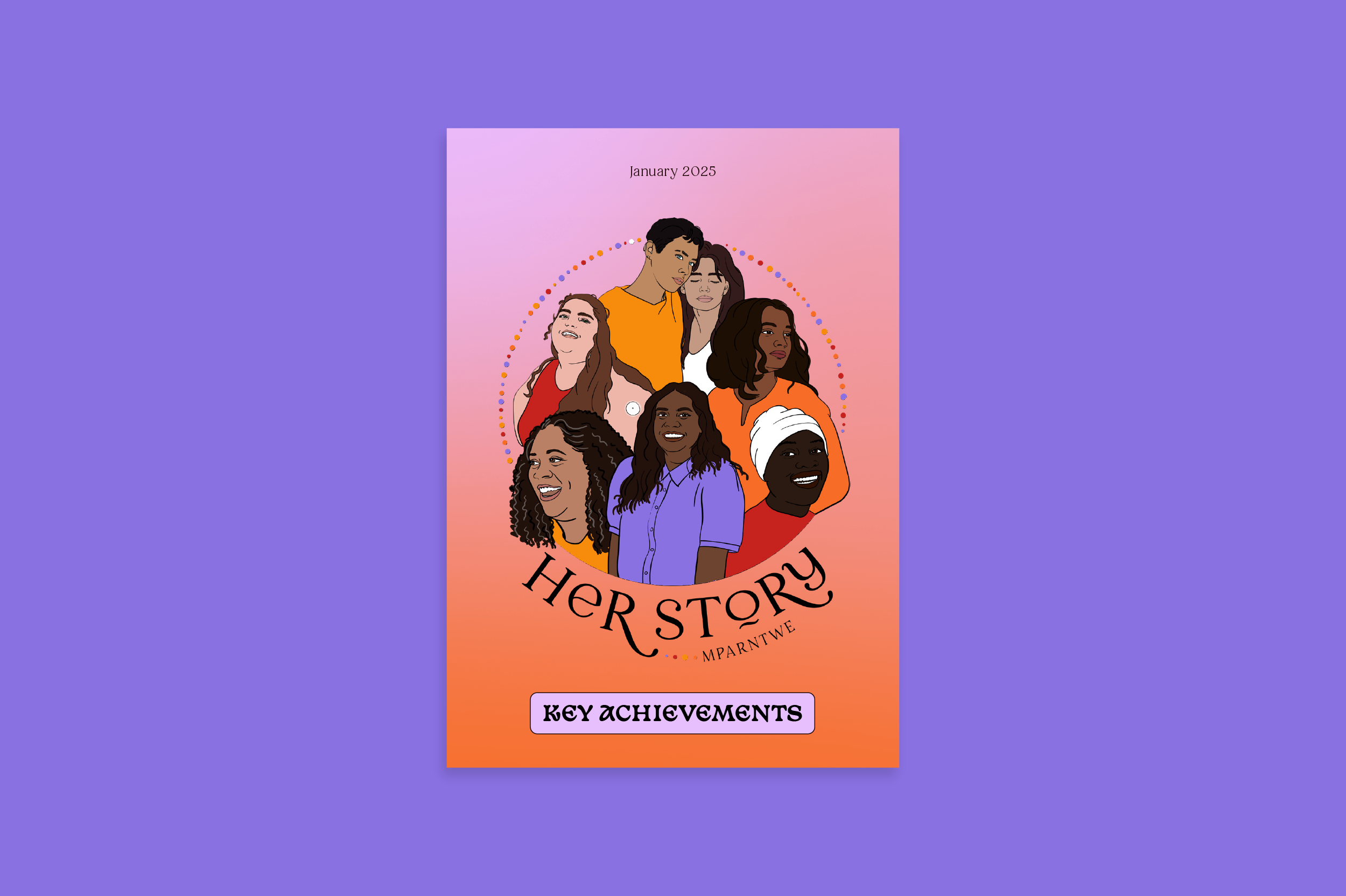
Over the past two years, we’ve focused on addressing barriers to empowerment by challenging discrimination and disadvantage and working to prevent domestic, family, and sexual violence. We’ve strived to create opportunities that celebrate community strengths through sports, arts, and storytelling, while delivering research and programs that create lasting impact.
As Her Story turns two, this report reflects on our key achievements, celebrates our journey, and sets our sights on an exciting future.

Caring About Care
About the project
Her Story lead on the Central Australian component of the Caring About Care research, which explores the scope, nature, and value of care work performed by Aboriginal and Torres Strait Islander women, emphasising their conceptualisation of care as a source of personal and cultural strength. Conducted in partnership with Aboriginal organisations across diverse Australian regions, the study utilised interviews, time-use surveys, and ABS data to analyse unpaid care work. Findings highlight how colonialism has exacerbated care loads and how mainstream definitions of care marginalise Indigenous perspectives, which deeply intertwine care with family, community, culture, and Country. Indigenous women often balance substantial unpaid care with community-focused paid work, yet their contributions remain undervalued. The report advocates for a transformative approach to policy which centres Indigenous women's voices and care practices.
Turn Up Respect Campaign
U Right Sis? and the Department of Social Services
About the project
The Turn Up Respect campaign encourages First Nations people to ‘Turn Up Respect’ and silence the disrespectful influence of powerful new social media influencers who are targeting young people and fuelling disrespect towards women and girls. U Right Sis? is celebrated in one of the Turn Up Respect campaign’s videos as an incredible family violence prevention initiative that is making a significant impact in First Nations communities, to inspire and give hope to others, in order to meet the ongoing challenges of disrespect towards women.

A Sharing of Stories:
Indigenous Women’s Movements in Australia
About the project
This report communicates the findings of the InFem project, which employed participatory action research and draws from interviews with First Nations women activists, and case studies developed with two Australian First Nation’s women’s organisations, Galiwin’ku Women’s Space on Galiwin’ku/Elcho Island and Strong Women Talking in Meanjin/Brisbane.
Drivers of violence against Aboriginal and Torres Strait Islander women Animation
Tangentyere Council and WoSSCA
About the project
Her Story collaborated with Tangentyere Council and Women’s Safety Services of Central Australia (WoSSCA) to produce a series of animations which communicate key concepts in domestic, family, and sexual violence contextualised to the Northern Territory.
Stay tuned for our upcoming animation on what works to prevent violence.

U Right Sis?
WoSSCA and Kungas
About the project
U Right Sis? is a primary prevention program aimed at empowering communities to identify and respond to technology-facilitated abuse in Central Australia. U Right Sis? develops resources that improve digital literacy so that Aboriginal and Torres Strait Islander women and girls can keep themselves safe online. We lead on program design and delivery - which involves running workshops in community setting and schools throughout Central Australia - as well as monitoring and evaluation. The program is a partnership between Her Story, Women’s Safety Services of Central Australia (WoSSCA) and Kunga Stopping Violence Program (Kungas).

Men’s Behaviour Change Program Peer Support Worker Evaluation
Tangentyere Council
About the project
The Tangentyere Men’s Behaviour Change Program – Peer Support initiative invites Aboriginal men who have participated in the Tangentyere Men’s Behaviour Change Program (MBCP) to become peer support workers who collaborate with facilitators to provide ongoing support to current participants. The Baseline Evaluation reviewed data and literature to provide key findings as well as recommendations for the program moving forward.
Coercive Control Animation
Tangentyere Council and WoSSCA
About the project
Her Story collaborated with Tangentyere Council and Women’s Safety Services of Central Australia (WoSSCA) to produce a series of animations which communicate key concepts in domestic, family, and sexual violence contextualised to the Northern Territory.

Gender Equity Strategy
Central Land Council
About the project
The Central Land Council is an Aboriginal council made up of community-elected women and men across Central Australia, formed in the 70s to represent Aboriginal communities, fight for their rights, help them reclaim and manage their land, and realise the opportunities that come with the recognition of land rights.

Child Sexual Abuse Co-Design
NSW Primary Health Network (PHN) Consortia
About the project
Traditionally, domestic, family and sexual violence (DFSV) has been regarded as a social justice issue - yet DFSV has been proven to be a major cause of significant health issues, making it in fact, a primary healthcare issue.

Supporting Recovery
Hunter New England and Central Coast Primary Health Network
About the project
Recovery is a vital component of supporting victim-survivors of domestic, family and sexual violence (DFSV) and plays an important role in ending gendered violence.

Amplifying Voices Evaluation
YWCA Australia
About the project
YWCA engaged Her Story to undertake an evaluation of their innovative Amplifying Voices Program. The Amplifying Voices Program aims to address the gendered drivers of violence against women through a mentoring and leadership program. The program aims to engage and empower young women and gender-diverse people with lived experience of domestic, family, and sexual violence, housing insecurity, and risk of homelessness. These young women and gender-diverse people are supported to advocate and inform responses to domestic, family, and sexual violence, including intersecting risk factors, such as homelessness. The evaluation of the Amplifying Voices program will document the program model, assess practice learnings, and identify key impacts and outcomes.